

Understanding the Racial Equity Toolkit (RET) for the Seattle Transit Measure
Summary:
- Historically, the Seattle Transit Measure (STM) has supported reliable bus service, transit programs, and ORCA subsidies to help people get where they need to go.
- Mayor Katie Wilson’s proposed STM renewal has the potential to further advance the City’s race and social justice goals.
- A Racial Equity Toolkit (RET) is a key part of the proposal, helping us direct transit investments to remedy inequities affecting Black, Indigenous, and People of Color (BIPOC) communities, seniors, people with disabilities, and others who have been traditionally underserved by government investment.
- The Seattle Transit Measure RET is informed by the Seattle Transportation Plan (STP) and the Transportation Equity Framework (TEF), outlining how transit investments can be directed equitably.
- Key examples include free ORCA cards for eligible low-income Seattle residents and expanded off-peak transit service, which are designed to directly benefit historically underinvested communities.
- Moving forward, the Racial Equity Toolkit (RET) will guide SDOT in ensuring that STM-funded programs continue to promote racial equity and benefit those who need it most.
Historically, the Seattle Transit Measure (STM) has supported reliable bus service, transit programs and free ORCA cards to help people across Seattle get where they need to go.
Mayor Katie Wilson’s proposed Seattle Transit Measure renewal has the potential to further advance the City of Seattle’s race and social justice goals, supported by RSJI Ordinance CB 120525.
Black, Indigenous and People of Color (BIPOC) and low-income communities, as well as seniors and people with disabilities, continue to face significant transportation-related challenges. Addressing transportation inequities helps reduce disproportionate rates of illness, death, social isolation and poverty; long-term impacts of pollution; and limited access to opportunities and wealth. Transportation is essential to reach key services like jobs, education, healthcare, community and entertainment.
By supporting fare subsidy programs and prioritizing transit service at times and in places for those who rely on it most, STM helps ensure the benefits of this measure are felt by populations who might be most burdened by the tax, or who have faced historic underinvestment.
We are committed to reconciling and repairing our history of systemic and structural racism, that resulted in exclusionary planning in our transportation system. The STM renewal reflects that dedication in alignment with the City’s Race and Social Justice Initiative (RSJI).
The Racial Equity Toolkit (RET) is a key part of Mayor Wilson’s Seattle Transit Measure proposal.
The STM has long been a vital investment for Seattle’s public transit system, and our commitment to expanding transit access. STM renewal directly shapes SDOT’s ability to deliver an accessible, equitable, and robust system.
The RET is designed to guide the development and assessment of policies, programs, and initiatives with a focus on promoting racial equity. This RET focused on whether the STM renewal would advance racial equity, where inequities may persist, and what strategies can reduce harm.
Jump to:
Affordability
While Washington’s regressive tax system places a heavier burden on lower-income people, state law gives cities very few ways to fund transit. If we do not use the tools we have, we would have to cut bus service and transit passes, which would hurt low-income and BIPOC communities the most.
At an estimated $2.42 a month per household, this measure costs less than a single bus fare. Plus, visitors and businesses help pay this tax, and essentials like groceries, rent, baby products and medicine are completely tax-free. This ensures we can keep providing the reliable transit service and free ORCA passes that people need every day.
To address the disproportionate tax burden on our low-income residents and increase racial equity, the STM renewal focuses on bringing real, helpful benefits directly to those who need them the most:
- Household savings: STM service investments improve transportation access by making buses come more frequently. This may offset the high cost of car ownership—including parking, fuel, insurance, and maintenance—freeing up resources for other essential needs.
- Targeted transit service: Preserving and increasing transit service, particularly on nights, weekends, and mid-day improves reliability and affordability for shift workers, low-income households, and residents living farther from job centers.
- Impactful fare subsidies: Continued investment in fare subsidy and transit education programs help fill access gaps.
Identifying Equity Priority Outcomes
Citywide outreach for the new 10-year renewal proposal included public surveys, active engagement at community events and meetings, dedicated conversations with program partners and participants, and regular discussions with the Transit Advisory Board and the Transportation Equity Workgroup.
The RET for the STM Renewal Proposal is also grounded in outreach and planning carried out in developing the Seattle Transportation Plan (STP) and Seattle’s Transportation Equity Framework (TEF).
Seattle Transportation Plan (STP)
This proposal aligns with and supports the Seattle Transportation Plan, a 20-year vision for the future of our transportation system. Seattleites told us they want to be able to use transit as a more affordable and reliable way to get around, especially as the cost of owning and maintaining a car continues to rise. The STP includes many parts that address racial equity that are important considerations as the STM is developed. This includes:
- an equity goal to prioritize investments in disproportionately impacted communities and removal of cost barriers;
- a sustainability goal and encouragement of transit trips; and
- a mobility and economic vitality goal and improvement of access to frequent and reliable transit.
Transportation Equity Framework (TEF)
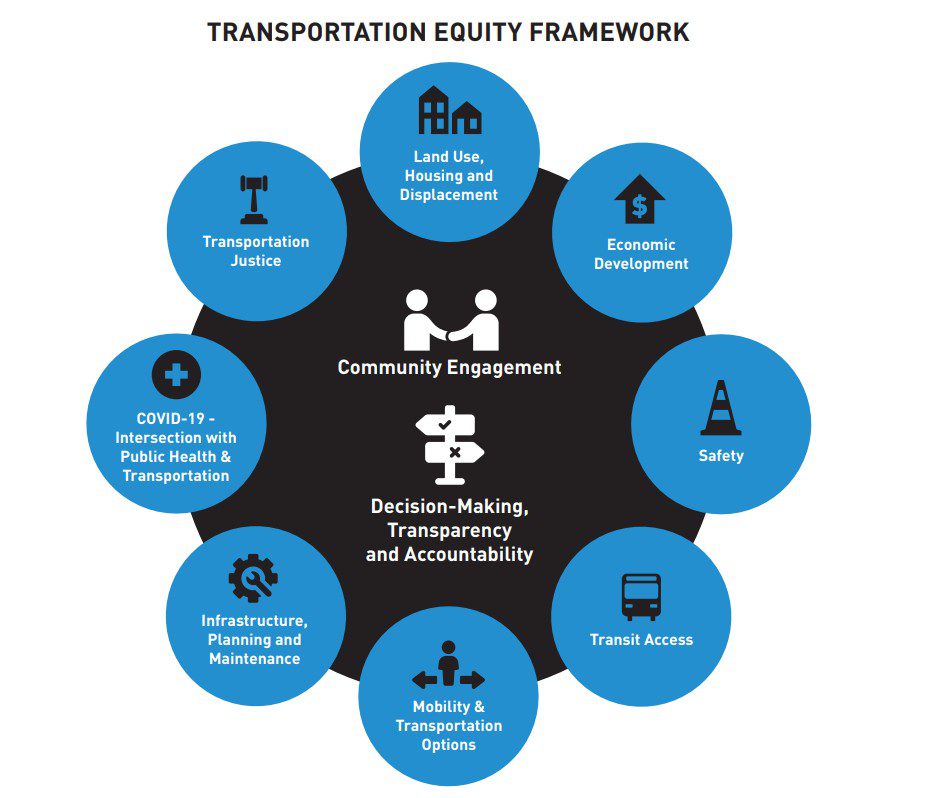
SDOT’s Transportation Equity Framework (TEF) and its implementation plan were co-developed with community members in the Transportation Equity Workgroup.
The TEW, a diverse group of community members, helped us establish the City’s Transportation Equity Framework (TEF). The TEF is a community-guided vision that serves as our shared roadmap for building a fair and just transportation system, and the TEF strategies under Transit Access directly connect to the STM Renewal. These strategies help ensure the renewal advances the transit access priorities identified by the TEW and the broader community.
STM Racial Equity Outcome Priorities
Building from the outcomes identified in the STP and TEF, the key community outcomes related to the Seattle Transit Measure Renewal include:
- Ensure transit remains affordable and reliable.
- Increase and preserve investments in equity-priority areas across Seattle’s transit network
- Maintain and expand the City’s role in regional conversations on transit affordability.
- Reduce burden created by a regressive tax structure with transit service investments and ORCA subsidy programs.
The STM proposal would equip SDOT with resources to respond to and prioritize the needs of historically underinvested communities and foster an inclusive equity practice.
In the STM Proposal, we have designed investments with an equity lens to focus on those equity outcomes listed above. Some of the ways we incorporated equity into the proposal include:
- Keeping and adding transit frequency and reliability in equity-priority areas from our core transit service provider, King County Metro
- Strengthening rider safety with King County Metro
- Expanding ORCA subsidy programs with low-income housing providers and community-based organizations.
- Supporting transit education programs that help riders navigate the transit system and access affordable mobility options
- Using equity-centered decision-making processes and sustaining our collaboration with advisory partners and organizations such as the TAB and the TEW, who maintain community perspectives from the STM.
We will design and implement STM investments with a focus on promoting racial equity, ensuring that STM dollars reach those who need it most.
STM renewal aligns with the racial-equity goals of the Seattle Transportation Plan and the Transportation Equity Framework, and continued accountability is essential. Monitoring, evaluating, and adapting our STM investment strategies will be crucial to maintaining alignment with the City’s equity goals.
SDOT will use equity-focused decision-making and annual public reporting to track how STM investments affect BIPOC communities and to ensure the renewal supports Seattle’s long-term goal of eliminating racial disparities in access to affordable, reliable transit. By doing so, we can take meaningful strides toward building a more equitable transportation system for people who live, work, and play in Seattle.
Legal Disclaimer:
EIN Presswire provides this news content "as is" without warranty of any kind. We do not accept any responsibility or liability for the accuracy, content, images, videos, licenses, completeness, legality, or reliability of the information contained in this article. If you have any complaints or copyright issues related to this article, kindly contact the author above.
